How do I know if I'm attractive? And why do I feel so ugly?
You cannot judge it well yourself. A mirror flips your face, close selfies distort it, and mood changes what you see. Better signs are how people react to you over months, a few straight photos taken from about 1.5 meters, and honest views from several people you trust. People agree on some looks, but private taste counts about as much, so no single verdict is final.
Lookist gives one front photo an overall score and 15 feature scores, with notes on what the scan saw.
Download Lookist for iPhoneWhy is it so hard to know if you are attractive?
Because you never see your face the way other people do. You see it in a mirror, flipped left to right, or in a phone held close to your face. Both views are different from what a person across the table sees.
Your own brain adds a filter too. In a 2008 study at the University of Chicago, people picked out a version of their face that had been made more attractive as their real face, more often than the real photo. The researchers linked this to how people feel about themselves deep down. So the face you picture is not a fixed record. It moves with how you feel.
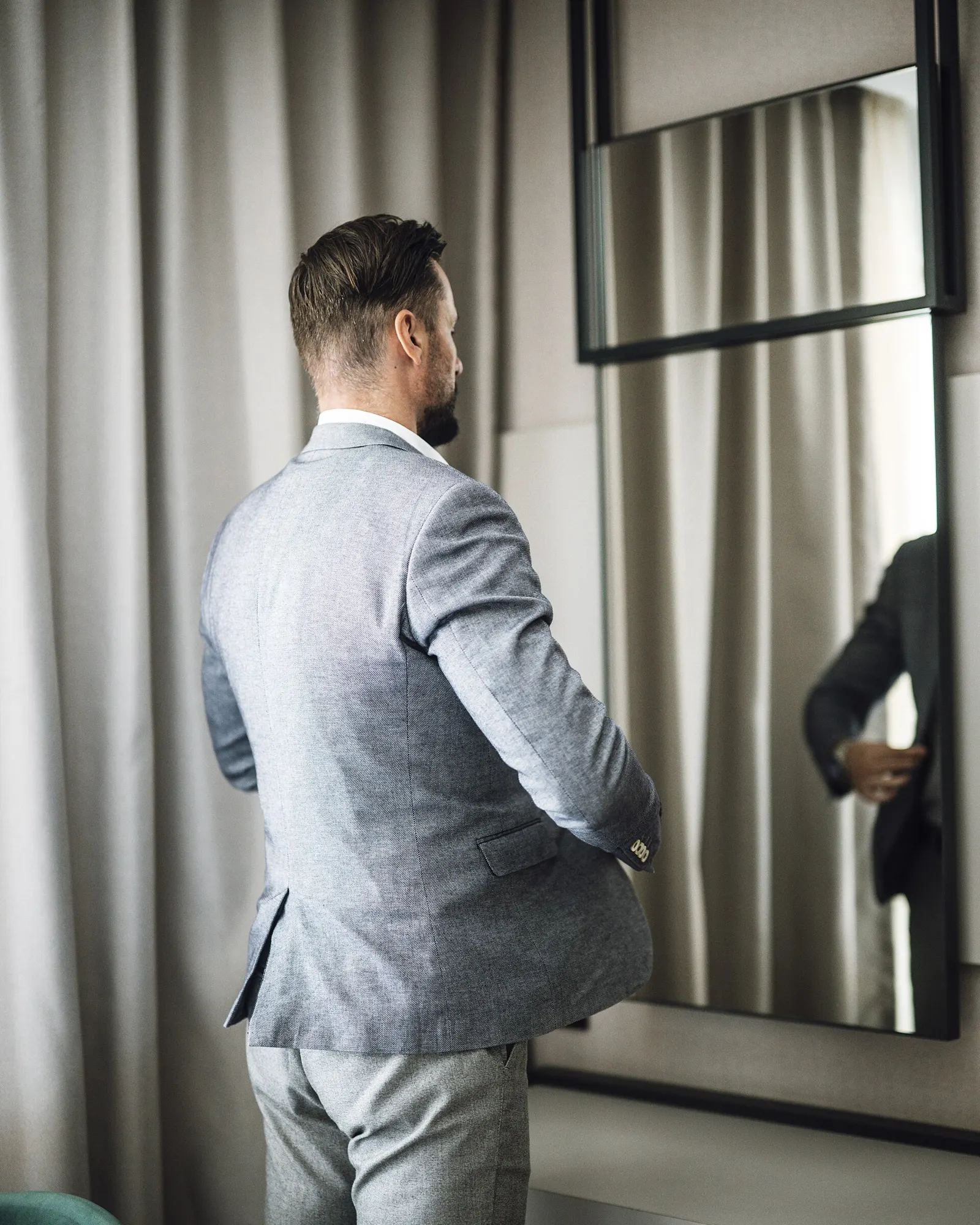

Am I more attractive in the mirror or in photos?
Most people prefer their mirror face, and their friends prefer the photo. A 1977 study showed people 2 prints of their own face: a true photo and a flipped one. They liked the flipped print, the one that matched their mirror. Their friends liked the true print, the one they see every day. Neither face changed. Only the familiar version did.
Selfies add a second problem. A 2018 study found that a photo from about 12 inches makes the nose look about 30% wider than a photo from 5 feet. So the face in a close selfie is wider in the middle than your real face. Our guide on why your face looks different in selfies explains the full effect.
How can I know if I am attractive? An honest check
No test gives a final answer, but you can get a fairer picture than a mirror and a bad day. Use several signals, not one.
- Take 3 photos the way others see you. Face a window for even light, hold the camera at eye height and shoot from about 1.5 meters with a timer, or use the 2x lens.
- Keep a neutral face in one photo and a real smile in another. Turn off beauty filters and the mirror setting.
- Wait a day, then look at the photos as if they were of someone else. First impressions of your own face right after you take a photo are the harshest.
- Ask 3 to 5 people you trust for one thing that works about your look and one thing to try. Specific answers help more than a number.
- Notice reactions over months, not one night. A single comment or one rating site tells you about that person, not about you.
Do people agree on who is attractive?
Partly. A 2000 review of 11 meta-analyses found that raters agree a lot about who is and is not attractive, within a culture and across cultures. Our guide to what makes a face attractive lists the factors they share: averageness, symmetry, skin and a warm expression.
But private taste is just as real. A 2006 study found that private taste is about as strong as shared taste when people judge faces. A 2015 study of 761 pairs of twins found that personal face preferences come mostly from each person's own life experience, not genes. That is why the same face gets a 4 from one stranger and an 8 from another.
What is average attractiveness?
On most rating scales, average sits near the middle, and most people sit close to it. Lookist publishes totals from 312 real scans: the median overall score was 5.4 out of 10, and nobody scored 8 or higher. A score in the 5s is the normal result, not a bad one.
Average is also not plain. In a 1990 study, faces that were blended from many photos into one 'average' face were rated as more attractive than almost every single face in the blend. A face close to the middle of the population is a face people like.
Source: Langlois and Roggman, 1990: attractive faces are only average (Psychological Science)
Why am I so ugly? Why feeling ugly is not the same as being ugly
If you search 'why am I so ugly', you are probably having a hard time, and that matters more than any answer about faces. The feeling is real. It is often not an accurate reading of your face.
Comparison is a big part of it. A 2016 review of 20 studies found that time on social media is linked with worse body image and eating concerns. Viewing and posting photos were the most harmful activities, and comparing your looks with other people was how the harm worked. The faces in your feed are picked, lit, angled and often edited. Yours, in a bathroom mirror at night, is not.
What helps: spend less time on accounts that make you feel worse, stop checking your face in mirrors and selfies many times a day, and take care of what you can change, like sleep and skin. Our guide on how to be more attractive covers the changes with evidence behind them.
Am I not attractive enough to date?
A face is one part of attraction, not the whole of it. In a 2016 speed dating study, an open, relaxed posture was the body language that best predicted a 'yes'. A smile can make up for a face that is less attractive in shape. And because private taste is about as strong as shared taste, people who like your look exist even if one person does not.
If dating feels hopeless, focus on what you control: how you carry yourself, how you dress and groom, and where you meet people. Rating your face again does not change any of those.
Source: Vacharkulksemsuk and colleagues, 2016: dominant, open nonverbal displays are attractive (PNAS)
When worry about your looks is too much
Most people dislike something about their face. For some people the worry takes over. The NHS describes body dysmorphic disorder (BDD) as a mental health condition where a person spends a lot of time worrying about flaws in their appearance, flaws that are often unnoticeable to others. A 2016 review estimated that about 1.9% of adults and 2.2% of teenagers have it.
The NHS lists signs such as these. If several sound like you, it is worth talking to someone.
- You worry a lot about one area of your body, often your face.
- You spend a lot of time comparing your looks with other people's.
- You check mirrors a lot, or avoid them completely.
- You go to a lot of effort to hide flaws, for example with hair, makeup or clothes.
- You pick at your skin to make it 'smooth'.
Where to get help
BDD is treatable, and the NHS says symptoms usually do not go away without treatment. Talk to a doctor. In England you can also refer yourself to NHS talking therapies. If you are under 18, your doctor can refer you to young people's mental health services.
If you feel unsafe or in crisis, reach out now. In the US, call or text 988 to reach the 988 Suicide and Crisis Lifeline, day or night. In the UK and Ireland, call Samaritans on 116 123. In an emergency, call your local emergency number.
Can a face rating app tell me if I'm attractive?
It can describe one photo, not you. A face score is an estimate from the light, angle, distance and expression in that photo. Change any of them and the score moves. It does not measure your worth, how people feel around you or who will find you attractive. The same is true when you ask ChatGPT to rate your face.
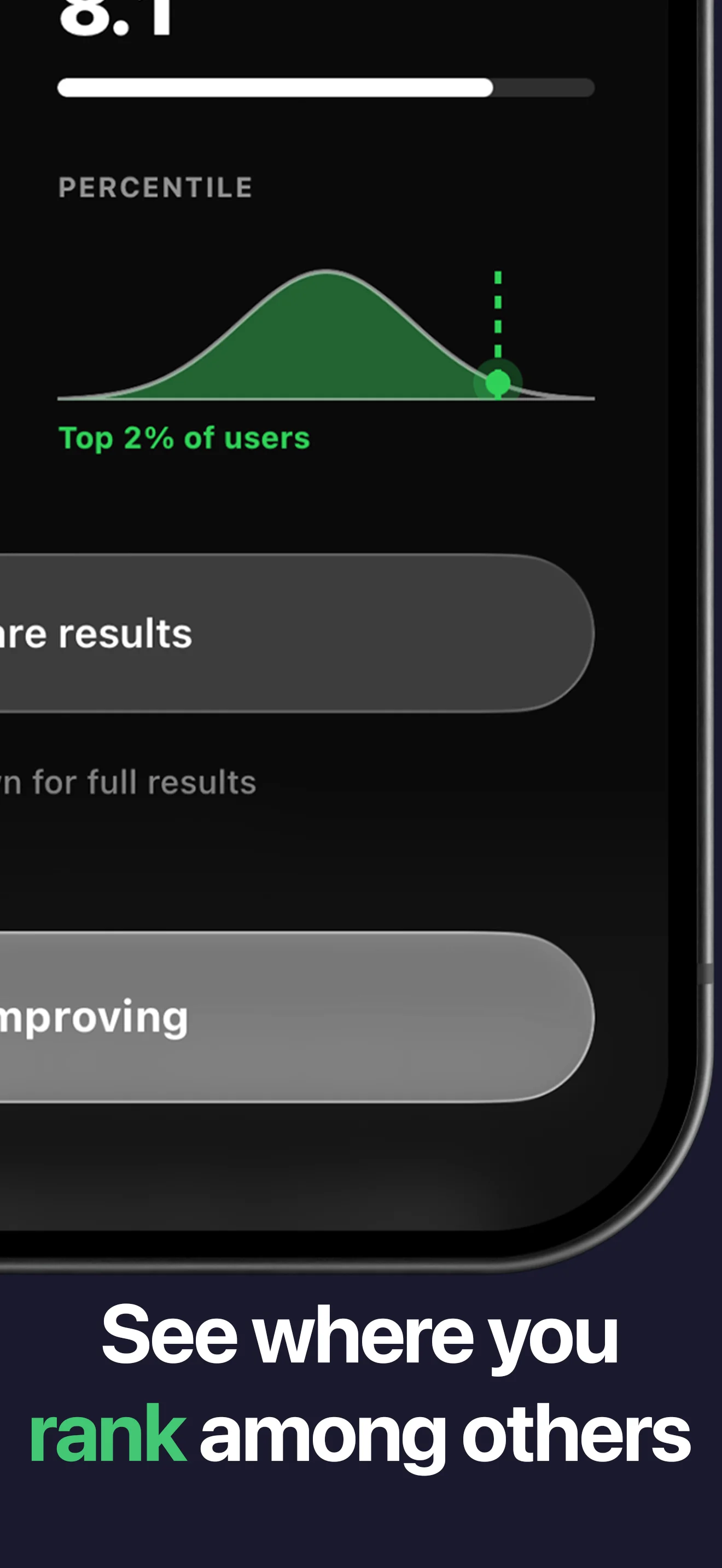
Lookist gives one front photo an overall face score out of 10 and 15 feature scores, with 3 to 7 notes on what the scan noticed. It is most useful for the parts you can change, like skin, and for comparing scans taken in the same setup. If checking scores makes you feel worse, stop. The face rating tool page shows what a report looks like.
Frequently asked questions
How do I know if I'm attractive?
Use several signals, not one. Take straight photos from about 1.5 meters in window light, look at them a day later, ask 3 to 5 people you trust for specific feedback, and notice how people react to you over months. Mirrors and close selfies mislead, and one stranger's rating reflects their taste.
Why am I so ugly?
Feeling ugly is often not the same as being ugly. Mirrors flip your face, close selfies distort it, and comparing yourself with edited photos online is linked with worse body image. If the feeling takes over your day, talk to a doctor. In the US you can call or text 988 if you are in crisis.
Why do I look better in the mirror than in photos?
You are used to your mirror face, which is flipped left to right. A camera shows the true face, the one other people see, so small differences land on the side you do not expect. A 1977 study found that people prefer their mirror image while their friends prefer the true photo.
What is average attractiveness?
Average sits near the middle of a rating scale, and most people sit close to it. In 312 real Lookist scans, the median overall score was 5.4 out of 10 and nobody scored 8 or higher. Faces blended into an average are also rated as attractive, so average does not mean plain.
Am I conventionally attractive?
Conventionally attractive means you match the common beauty standard of your time and place. Research links that standard to averageness, symmetry, clear skin and a warm expression. Private taste counts about as much as shared taste, so many people who are not conventionally attractive are still very attractive to others.
Is it normal to feel unattractive?
Yes. Most people dislike something about their looks, especially in close selfies and on bad days. It becomes a concern when the worry takes hours of your day, makes you avoid people or leads you to hide or check your face all the time. Then talk to a doctor.
Sources and product details
- Epley and Whitchurch, 2008: mirror, mirror on the wall, enhancement in self-recognition (Personality and Social Psychology Bulletin) (checked November 7, 2026)
- Mita, Dermer and Knight, 1977: reversed facial images and the mere-exposure effect (Journal of Personality and Social Psychology) (checked November 7, 2026)
- Ward and colleagues, 2018: nasal distortion in short-distance photographs (JAMA Facial Plastic Surgery) (checked November 7, 2026)
- Langlois and colleagues, 2000: maxims or myths of beauty, a meta-analytic and theoretical review (Psychological Bulletin) (checked November 7, 2026)
- Hönekopp, 2006: private and shared taste in judgments of facial attractiveness (Journal of Experimental Psychology) (checked November 7, 2026)
- Germine and colleagues, 2015: individual aesthetic preferences for faces are shaped mostly by environments, not genes (Current Biology) (checked November 7, 2026)
- Langlois and Roggman, 1990: attractive faces are only average (Psychological Science) (checked November 7, 2026)
- Lookist: average face score, data from 312 real face scans (checked November 7, 2026)
- Holland and Tiggemann, 2016: social networking sites, body image and disordered eating, a systematic review (Body Image) (checked November 7, 2026)
- Vacharkulksemsuk and colleagues, 2016: dominant, open nonverbal displays are attractive (PNAS) (checked November 7, 2026)
- Golle, Mast and Lobmaier, 2014: something to smile about (Cognition and Emotion) (checked November 7, 2026)
- NHS: body dysmorphic disorder (BDD) (checked November 7, 2026)
- Veale and colleagues, 2016: body dysmorphic disorder in different settings, a systematic review and estimated weighted prevalence (Body Image) (checked November 7, 2026)
- 988 Suicide and Crisis Lifeline (checked November 7, 2026)
- Samaritans: contact a Samaritan (checked November 7, 2026)
- Lookist on the App Store (checked November 7, 2026)
For photo handling and account controls, read our privacy policy. For an issue with Lookist, visit support.
Put your report to use
Lookist gives one front photo an overall score and 15 feature scores, with notes on what the scan saw.
Download Lookist for iPhone