How to debloat your face: a 5-minute morning routine and what causes puffiness
To debloat your face, help the fluid that settled overnight move back down. Stand up and move. Use cool water or a cool compress for a minute. Stroke lightly from the center of your face out toward your ears and down your neck. Then drink a glass of water. The best fixes happen the night before: less salt and alcohol, enough sleep, and your head raised a little.
Use the same morning photo setup in Lookist and see your skin and feature scores side by side across scans.
Download Lookist for iPhoneWhat is face bloat?
Face bloat is extra fluid in the soft tissue of your face. It shows most under the eyes, in the eyelids and along the cheeks and jaw. It is not fat, and it changes over hours.
Gravity normally keeps more fluid in your lower body. When you lie flat for eight hours, that fluid spreads more evenly, including into your face. Cleveland Clinic calls a puffy face in the morning a sign of normal overnight fluid retention. Mild puffiness that fades within a few hours is usually not a concern.
Some nights make it worse: a salty dinner, drinks, crying, a short night or allergies. Those are the parts you can control.
How to debloat your face in 5 minutes
This routine uses the simple steps doctors recommend for mild swelling. Get upright, use something cool, and let gravity help. It will not change your face shape. It takes the morning edge off.
- Get up and move for one minute. Walk around, make coffee, brush your teeth. Being upright starts to drain fluid down.
- Drink a glass of water.
- Splash your face with cool water 10 times. Or hold a cool, damp cloth on your eyes and cheeks for 60 seconds.
- Wash your hands. With light pressure, stroke from the center of your forehead out to your temples, 5 times.
- Stroke from beside your nose out across your cheeks toward your ears, 5 times.
- Stroke from your chin along your jaw to below your ears, then down the sides of your neck, 5 times.
- Finish with a cold spoon or a cool gel eye mask under each eye for 30 seconds. Then moisturize and add sunscreen.
Does ice or cold water really depuff your face?
Cool compresses are the standard home advice for face swelling. MedlinePlus and Cleveland Clinic both list them. Cold narrows small blood vessels for a short time. Many people find their face looks tighter for a while after.
Be honest with yourself about the size of the effect. A 2019 review looked at trials after wisdom tooth surgery. Cold therapy helped pain a little but did not reduce measured facial swelling. Nobody has tested an ice roller on normal morning puffiness in a proper trial.
So use cold because it is quick and feels good, not because it is a cure. Wrap ice in a cloth, keep it moving, and stop after a minute or two. Do not hold ice directly on skin.
Does lymphatic drainage massage work on the face?
Lymph is the fluid that drains from your tissues back toward your blood. Face lymph vessels run outward and down toward the ears and neck. That is why the strokes in the routine go that way. Use light pressure. Lymph vessels sit just under the skin, so hard pressure does nothing extra.
The evidence is thin. In a 2025 trial, 34 women used a face roller or a gua sha tool. They used it 10 minutes a day, five days a week, for 8 weeks. Some face distances dropped by about 2 to 3 mm. There was no untreated group, so we cannot tell how much came from the massage itself.
Massage is low risk and can make you look less puffy for the morning. It does not remove fat or reshape your jaw. Skip it on broken skin, active acne or a painful swelling.
Source: Comparative effects of facial roller and gua sha massage, randomized trial, 2025 (J Cosmet Dermatol)
What causes a puffy face? Causes and fixes
Most morning puffiness comes from a short list of causes. Find the one that fits your night before, and fix that first.
| Cause | Why it happens | What helps |
|---|---|---|
| Lying flat | Fluid spreads into the face overnight | Get upright and move. Sleep with an extra pillow. |
| Salty food | Salt makes your body hold water | Keep dinner lower in salt. The adult limit is 6 g a day. |
| Alcohol | Linked to under-eye puffiness and redness | Drink less, earlier, with water in between |
| Short sleep | Tired faces look more swollen around the eyes | 8 to 10 hours for teens, 7 or more for adults |
| Crying | Tears and rubbing irritate the eyelids | Cool compress, then leave the area alone |
| Allergies | Hay fever and dust can swell the eyes and nose | Avoid the trigger. Ask a pharmacist about allergy treatment. |
| Steroid medicine | Some medicines cause fluid or fat changes in the face | Talk to the prescriber. Do not stop on your own. |
Source: MedlinePlus (US National Library of Medicine): facial swelling
What to do the night before to wake up less puffy
The morning routine helps. The night before helps more. Most of these take no extra time.
The NHS lists eating too much salty food as one of the usual causes of fluid swelling. Ramen, chips, pizza, soy sauce and takeout carry a lot of it. One salty dinner can show on your face the next morning.
- Eat dinner two or three hours before bed and keep it lower in salt.
- If you drink alcohol, have less and alternate with water.
- Take off makeup and wash your face, so your eyes do not get irritated overnight.
- Raise your head a little with one extra pillow.
- Go to bed at a time that gives you a full night: 8 to 10 hours for teens and at least 7 for adults.
Source: NHS: oedema (swelling)
Why does bad sleep make your face puffy?
Sleep loss changes how your face looks to other people. In a study at the Karolinska Institute, 40 people rated photos of 10 faces. Each person had photos taken after normal sleep and after a night without sleep. The tired faces had more swollen eyes, darker circles, hanging eyelids and paler skin.
Sleep experts recommend 8 to 10 hours a night for ages 13 to 18 and 7 or more for adults. If you are on 6, more sleep may do more for your morning face than any roller.
Do debloating drinks and foods work?
Water helps if you are short on fluid, and it is a better choice than soda or energy drinks. The NHS guide is 6 to 8 cups or glasses of fluid a day. Drinking far more than that will not flush your face.
Debloat teas, detox drinks and water pills sold online are a different story. Many work by making you pee. That can make you dehydrated, and the puffiness comes back. Do not take water pills unless a doctor prescribes them.
The food change with the biggest effect is less salt. That means less processed and takeout food, not a special product.
Is it bloat or face fat?
Take a photo when you wake up and another in the evening, in the same light. If your face looks clearly slimmer by evening, a lot of what bothers you is fluid. Fat does not change between morning and night.
If your face looks just as full at 6 pm, the routine on this page will not change much. Overall fat loss will. The face fat guide covers that plan.
When is a puffy face a medical sign?
Normal morning puffiness is mild, affects both sides and fades within a few hours. Swelling that is sudden, painful, one-sided, getting worse, or lasting days is different. See a doctor for those. If your lips, tongue or throat swell, or you have trouble breathing or swallowing, call emergency services.
- Allergies: hay fever can cause puffy, itchy eyes and a blocked nose. Angioedema is deeper swelling, often of the eyes, lips or tongue, and needs urgent care if it affects your breathing.
- Thyroid: an untreated underactive thyroid can cause a puffy face, hands and feet. Tiredness, weight gain and feeling cold are other signs.
- Kidneys: in nephrotic syndrome, swelling often shows first around the eyes, then in the legs. Urine can look frothy.
- Cushing's syndrome: a red, round face that builds up over weeks to months, often from long-term steroid medicine.
- Infection: one-sided swelling with pain, heat, redness or fever, such as a tooth abscess or skin infection.
Source: NHS: angioedema
How to look less puffy in photos
If you need a photo today, the setup matters as much as your face. A close selfie makes the middle of the face look wider. Soft light from a window fills in shadows under the eyes.
Stand a little farther back and zoom slightly. Hold the camera at eye level or a bit above. Push your head forward and down a little so your jaw sits clean against your neck.
See how your face changes with Lookist
Lookist reads a front photo and gives 15 feature scores with written notes. They include skin clarity, skin texture, skin tone, skin radiance and eye brightness. Puffy mornings and tired eyes can show up in those notes.
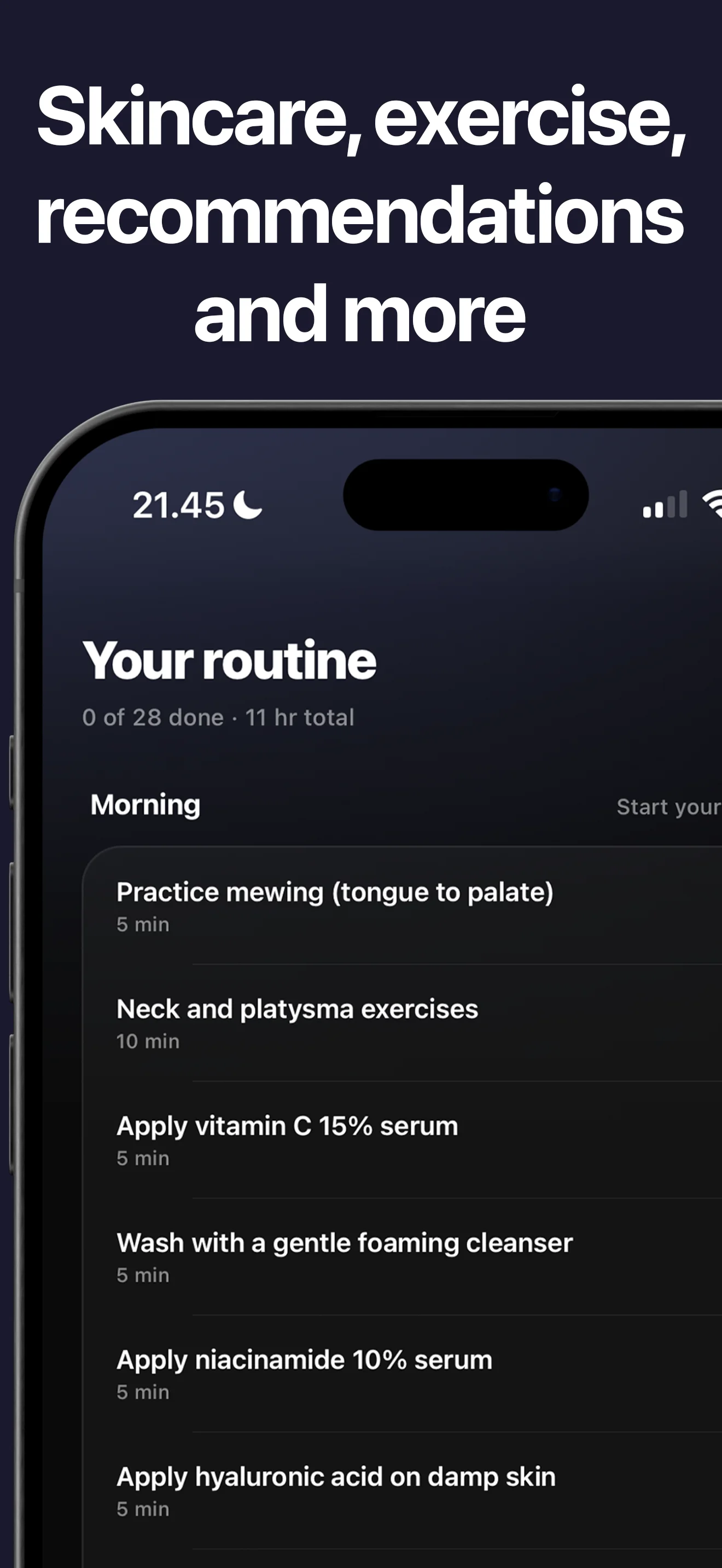
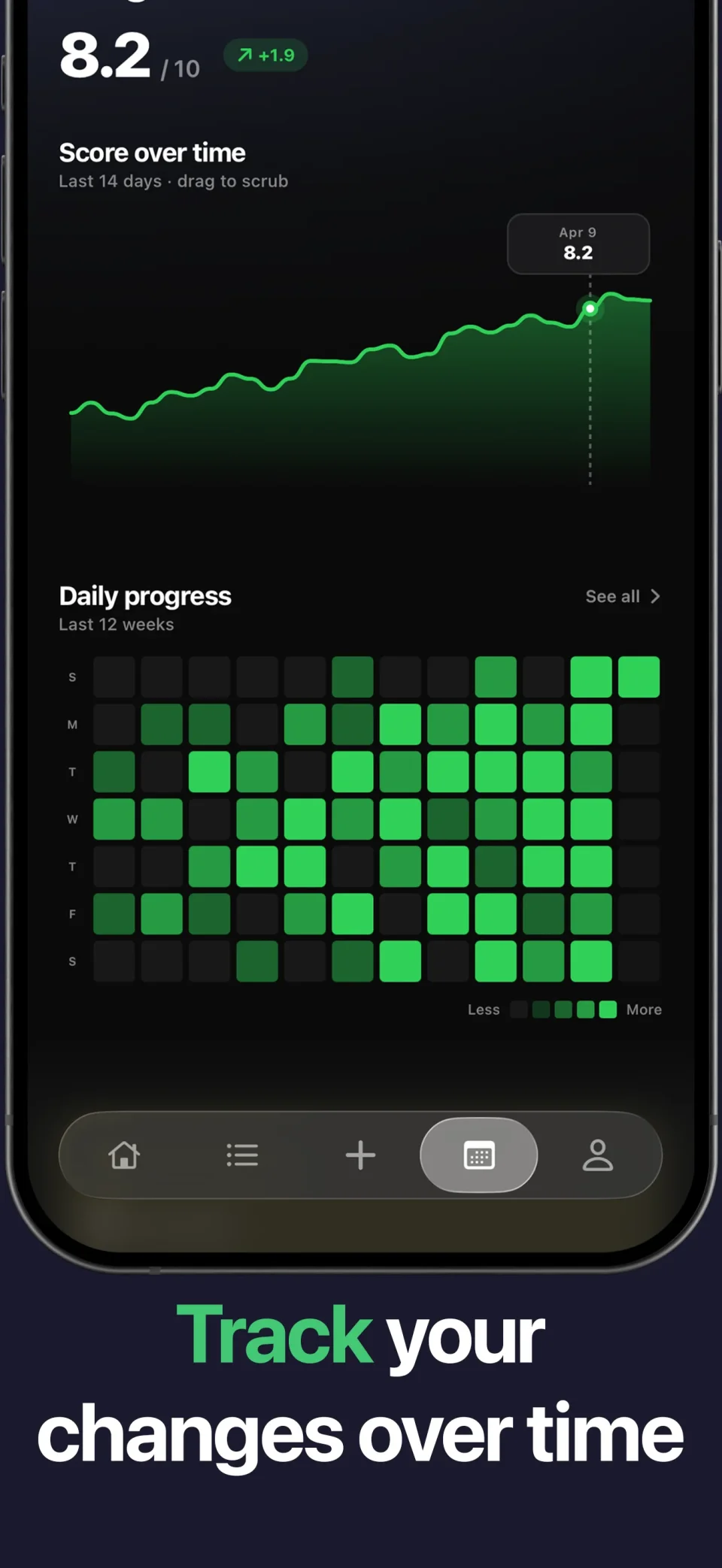
The daily plan includes skin care, gentle hair care and sleep reminders. You check off tasks and see your routine history. Scan history lets you compare scans over time. Take your scans at the same time of day so morning puffiness does not skew the comparison.
Frequently asked questions
How do I debloat my face fast?
Get upright and move for a few minutes, and drink a glass of water. Then use cool water or a cool compress for about a minute. Then do light strokes from the center of your face toward your ears and down your neck. Most mild puffiness fades within a few hours on its own.
Why is my face so puffy in the morning?
When you lie flat all night, fluid spreads into your face. Salty food, alcohol, short sleep, crying and allergies make it worse. Cleveland Clinic calls mild morning puffiness normal overnight fluid retention.
Does ice help a puffy face?
Cold can make your face look tighter for a short time, and doctors list cool compresses for mild swelling. Trials after dental surgery did not find that cold reduced measured swelling, so expect a small effect. Wrap ice in a cloth and keep it on for a minute or two.
Does lymphatic drainage reduce face puffiness?
It may help a little in the short term. A small 2025 trial of face rollers and gua sha found 2 to 3 mm changes in face measurements. It had no untreated group. Use light pressure toward the ears and neck.
How long does face bloating last?
Normal morning puffiness usually fades within a few hours of being upright. Puffiness from a salty meal or drinks can last into the next day. Swelling that lasts more than a few days needs a doctor's check.
What foods cause face bloating?
Salty foods cause it most often: ramen, chips, pizza, soy sauce, processed meat and takeout. Alcohol is the other common cause. The NHS adult salt limit is 6 g a day, about one level teaspoon.
Can allergies make your face puffy?
Yes. Hay fever and dust or pet allergies can cause puffy, itchy eyes and a blocked nose. Sudden swelling of the lips, tongue or throat is an emergency.
Is a puffy face a sign of a health problem?
Usually not, if it is mild, on both sides and gone by midday. See a doctor for swelling that is sudden, painful, one-sided, getting worse or lasting days. Thyroid, kidney and hormone problems and some medicines can all cause a puffy face.
Sources and product details
- Cleveland Clinic: facial swelling
- MedlinePlus (US National Library of Medicine): facial swelling
- Cryotherapy for pain, trismus, and facial swelling after third-molar surgery, systematic review, 2019 (J Am Dent Assoc)
- Comparative effects of facial roller and gua sha massage, randomized trial, 2025 (J Cosmet Dermatol)
- NHS: oedema (swelling)
- NHS: salt in your diet
- Goodman and colleagues, 2019: Impact of smoking and alcohol use on facial aging in women (J Clin Aesthet Dermatol)
- Sundelin and colleagues, 2013: Cues of fatigue, effects of sleep deprivation on facial appearance (Sleep)
- Paruthi and colleagues, 2016: Recommended amount of sleep for pediatric populations, AASM consensus (J Clin Sleep Med)
- Watson and colleagues, 2015: Recommended amount of sleep for a healthy adult, AASM and SRS consensus (Sleep)
- NHS: water, drinks and your health
- NHS: angioedema
- NHS: allergic rhinitis
- MedlinePlus (US National Library of Medicine): hypothyroidism
- NHS: nephrotic syndrome
- NHS: Cushing's syndrome
- Lookist on the App Store
For photo handling and account controls, read our privacy policy. For an issue with Lookist, visit support.
Put your report to use
Use the same morning photo setup in Lookist and see your skin and feature scores side by side across scans.
Download Lookist for iPhone