What is mewing? Meaning, how to mew, and what it can really do
Mewing is resting your whole tongue flat against the roof of your mouth, lips closed and teeth lightly together. People do it to try to reshape the jaw. It is named after British orthodontist John Mew and his practice called orthotropics. The American Association of Orthodontists says there is no good evidence that it changes the jaw in adults. Online, mewing is also slang for a 'shush, jawline' gesture.
See your jawline, chin, and symmetry scores in a Lookist report and compare them across scans taken in the same setup.
Download Lookist for iPhoneWhat does mewing mean?
Mewing means holding your tongue flat against the roof of your mouth all day. People do it because they believe it will make the jaw sharper and the face more defined over time. The term comes from the surname of John Mew, the orthodontist who promoted the idea.
Online, mewing also has a second meaning. TODAY reports that teens use a 'mewing' gesture to dodge a question. They put a finger to their lips like a shush, then trace it along the jawline. The joke is: 'I can't answer, I'm mewing, I'm working on my jawline.'
So if someone asks what mewing is, it depends on the context. In a looksmaxxing video it's a tongue posture. In a classroom it's usually a meme.
Where did mewing come from?
Mewing comes from orthotropics, a set of ideas developed by British orthodontist John Mew. Cleveland Clinic says he developed the technique in the 1970s for his children and patients. His son, Mike Mew, also an orthodontist, later spread it through YouTube videos. It took off on social media around 2019.
The approach is controversial among orthodontists. In 2024 the British Orthodontic Society told patients to be careful with claims that a treatment will move a child's jaws a lot, cure jaw joint problems, or improve breathing. It said it sees no scientific evidence that patients can change the shape of their face this way. The same year, the UK General Dental Council removed Mike Mew from the dental register. The case was about orthotropic treatment of two children. The High Court dismissed his appeal in May 2026.
Source: British Orthodontic Society: claims about orthodontics (January 2024)
How to mew: the technique people describe
Here is the technique as mewing videos and Cleveland Clinic describe it. We include it so you know what people mean. It is not a treatment, and the evidence section below explains why.
- Close your lips and let your teeth touch lightly, or sit just apart. Don't clench.
- Put the tip of your tongue just behind your front teeth. That is where it sits when you say 'n'.
- Lay the rest of your tongue flat against the roof of your mouth, including the back third.
- Press gently, not hard. You should still be able to swallow and breathe through your nose.
- Keep your head level, chin neither tucked nor jutting.
- People who mew try to hold this as their resting posture through the day.
Source: Cleveland Clinic: does mewing work to reshape your jaw?
How many hours a day should you mew?
There is no evidence-based number. Mewing videos tell people to hold the posture all day as their default. No study has shown a dose that changes the face, so any figure you see online is a guess.
What matters more is comfort. A light, relaxed tongue rest with lips closed and nose breathing is normal for many people. Pressing hard for hours is a different thing, and that is where jaw pain starts. If your jaw, teeth, or temples ache, stop.
Source: American Association of Orthodontists: does mewing actually reshape your jaw?
Does mewing work? Claims versus evidence
The short answer for adults is no, not for bone. The AAO says the evidence for mewing's jawline claims 'is as thin as dental floss'. It adds that no current research shows a benefit to the jawline or oral health. Cleveland Clinic quotes an orthodontist who says the evidence 'soundly suggests that it isn't effective for any of the claims.'
This table sums up the common claims and what the sources say.
| Claim | What evidence says |
|---|---|
| Mewing reshapes the adult jaw | No good evidence. The AAO found no research showing a jawline benefit |
| Mewing changes face shape | The British Orthodontic Society says it sees no scientific evidence that patients can change face shape this way |
| Mewing fixes crooked teeth or an overbite | No evidence. The AAO warns uneven tongue pressure can shift teeth and cause bite problems |
| Mewing improves breathing or speech | The British Orthodontic Society says there is no evidence for these claims |
| Mewing gives a sharper jaw in photos | Partly true, through posture. A level head and closed lips can tidy the under-chin line in a photo |
| Mewing works better in kids | Faces change as kids grow. The BOS knows of no orthodontic method that makes big jaw changes |
Source: American Association of Orthodontists: does mewing actually reshape your jaw?
What mewing can and can't do
Mewing can't move adult bone. Genes and growth decide your jaw width, chin size, and cheekbones. The AAO says a complex mix of genetics, bone growth, and muscle development shapes the face.
What the posture can do is change how you hold your head and neck right now. When you push your tongue up, you lift your head, close your lips, and tighten the area under your chin. In a photo, that can make the jawline look cleaner. It is the same effect as standing up straight, and it goes away when you relax.
- Can help: head posture, closed-lip resting, a cleaner under-chin line in photos.
- Can't do: widen the jaw, grow the chin, raise cheekbones, or fix teeth in adults.
Source: American Association of Orthodontists: does mewing actually reshape your jaw?
Is mewing bad for you? The risks of hard mewing
Gentle tongue rest is mostly harmless. 'Hard mewing', where people push the tongue up with force for long periods, is where problems start. The AAO warns that too much pressure can shift teeth and cause crowding or gaps. It can also cause bite problems, jaw joint (TMJ) pain, and speech issues. Cleveland Clinic says mewing may worsen jaw tension and TMJ disorders.
The National Institute of Dental and Craniofacial Research lists the signs of a jaw joint and muscle disorder (TMD). They include jaw pain, pain that spreads to the face or neck, stiffness, locking, and painful clicking. It advises reducing habits like jaw clenching and gum chewing. If you notice these signs, stop mewing and see a dentist.
- Jaw or temple pain, or headaches after mewing.
- Painful clicking or popping when you open your mouth.
- Teeth feel sore, or your bite feels different.
- Your jaw feels stiff or gets stuck.
Source: National Institute of Dental and Craniofacial Research: TMD (jaw joint and muscle disorders)
Why mewing before and after photos look convincing
Most mewing 'results' online come from things that have nothing to do with the tongue. The before photo is often taken with the head tilted down and the mouth slack. The after photo has the chin level, lips closed, and better light.
Other changes are real but have other causes: weight loss, a teen growing up, a new haircut, or a beard. Camera distance also changes face shape in photos. A close selfie makes the face look rounder than a photo taken from farther away. Compare photos only if the setup is the same.
Common mewing mistakes that cause problems
Most mewing problems come from doing it too hard. Videos that push 'hard mewing' or chin tucks with force are the ones linked to jaw pain. If you still want to try the posture, avoid these mistakes.
None of this makes mewing work for bone. It only lowers the chance that you hurt your jaw or teeth while you try.
- Pressing hard with the tongue for minutes at a time. The AAO warns that too much pressure can move teeth.
- Clenching your teeth together while you hold the posture. The NIDCR advises reducing clenching if you have jaw pain.
- Pairing mewing with hours of hard gum chewing. The NIDCR lists gum chewing as a habit to cut back on for jaw pain.
- Tucking your chin down hard, which can give you a double chin in photos.
- Ignoring pain, clicking, or sore teeth. These are signs to stop.
Source: National Institute of Dental and Craniofacial Research: TMD (jaw joint and muscle disorders)
Better options for a more defined jaw
If you want a sharper jawline, these steps have more going for them than mewing. None of them change bone, but they change how the jaw looks.
- Lose body fat if you carry extra. Face fat drops as overall body fat drops, which shows the jaw edge.
- Reduce puffiness: sleep 8 hours or more, cut salt and alcohol, and drink water.
- Fix your posture: a forward head makes the neck look short and the jaw soft.
- Use a beard or haircut to add shape. A short, defined beard can square off a soft jaw.
- Take photos at eye level, from a bit farther away, with the chin slightly forward.
- See an orthodontist if you have a real bite or jaw problem. Braces and jaw surgery are the treatments with evidence.
Does mewing work for teens or adults?
Mewing fans often say it works if you start young. Faces do change a lot during growth. The British Orthodontic Society agrees that faces change naturally as kids grow. But it knows of no orthodontic method that makes big jaw changes. The AAO warns that tongue pressure can move teeth. Cleveland Clinic says kids and teens are most at risk of worse alignment.
Adults have finished growing. The AAO and Cleveland Clinic both say there is no evidence that mewing reshapes the jaw. If you're a teen worried about your jaw or bite, see an orthodontist. Early treatment for a real bite problem is common and has evidence behind it.
Source: Cleveland Clinic: does mewing work to reshape your jaw?
Track your jawline with Lookist instead of guessing
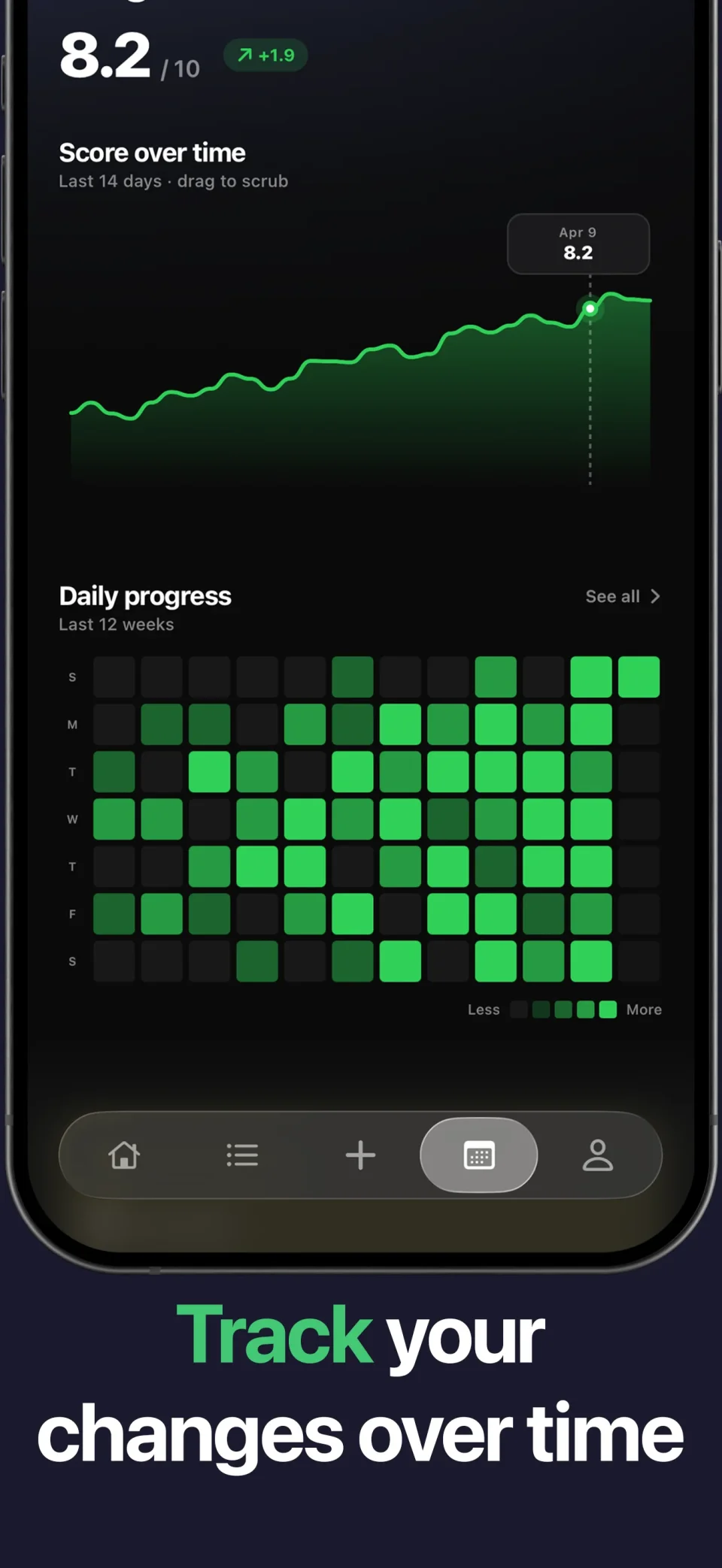
Mewing advice often runs on before and after photos taken in different light. If you want to see whether your jaw area looks different over time, you need the same setup each time. Lookist reads one front photo and scores 15 features, including jawline, chin, symmetry, and facial harmony. Each score has a written note.
Scan history lets you compare past scans over time. You can see if fat loss, posture, or a new haircut changed how your jaw looks in a photo. Use the same window light, distance, and neutral face each time. The Hairstyle Tester lets you try haircuts that add shape to the jaw before you book one.
Check your facial symmetry from a photo
Frequently asked questions
What is mewing in Gen Z slang?
It's a gesture: a finger to the lips like a shush, then a finger traced along the jawline. TODAY reports that teens use it to dodge a question. It means 'I can't talk, I'm mewing.' It is usually a joke.
How do you do mewing?
People rest the whole tongue flat on the roof of the mouth. The tip sits just behind the front teeth, with lips closed and teeth lightly together. They breathe through the nose and keep the head level. Press gently. Hard pressure can cause jaw pain.
Does mewing work for adults?
Not for bone. The American Association of Orthodontists says there is no current research showing that mewing benefits the jawline. Any change you see in adults is usually posture, fat loss, or photo setup.
How many hours should I mew a day?
No study gives a number, because no study has shown that mewing changes the face. A light, relaxed tongue rest is fine. Pressing hard for hours can strain the jaw, so stop if it hurts.
Is mewing 24/7 bad?
Gentle resting posture is generally harmless. Constant hard pressure is not. The AAO warns it can shift teeth, change your bite, and cause jaw joint pain. Stop if you notice jaw pain, clicking, or sore teeth.
What do dentists think of mewing?
Most orthodontic groups are skeptical. The AAO says the evidence is 'as thin as dental floss'. The British Orthodontic Society sees no scientific evidence that patients can change their face shape this way. They recommend seeing an orthodontist for real jaw or bite concerns.
Can mewing fix an overbite?
No. There is no evidence that mewing fixes an overbite. The AAO warns that uneven tongue pressure can make bite problems worse. An orthodontist can check your bite and explain options like braces or aligners.
Why is Gen Z obsessed with mewing?
It spread through looksmaxxing videos that promised a sharper jaw for no cost, then turned into a meme gesture. Before and after photos made it look easy. Most of those changes come from posture, lighting, growth, or fat loss.
Sources and product details
- TODAY: what mewing means in teen slang
- Cleveland Clinic: does mewing work to reshape your jaw?
- American Association of Orthodontists: does mewing actually reshape your jaw?
- British Orthodontic Society: claims about orthodontics (January 2024)
- High Court of England and Wales, 2026: Dr Michael Mew v The General Dental Council
- National Institute of Dental and Craniofacial Research: TMD (jaw joint and muscle disorders)
- Lookist on the App Store
For photo handling and account controls, read our privacy policy. For an issue with Lookist, visit support.
Put your report to use
See your jawline, chin, and symmetry scores in a Lookist report and compare them across scans taken in the same setup.
Download Lookist for iPhone