Do mewing and jawline exercises change your face?
No, not for adult bone. The American Association of Orthodontists says no current research suggests mewing gives any benefit to the jawline or oral health. We found no controlled trial of mewing. A 2024 trial of daily gum chewing for 6 months raised bite force but did not change jaw muscle thickness or jaw shape. Posture, fat loss and photo setup explain most results online.
Lookist scores your jawline in one front photo and lets you compare scans taken in the same setup over time.
Download Lookist for iPhone

Does mewing work?
Not in any way that research has shown. The American Association of Orthodontists says the evidence for mewing's jawline claims 'is as thin as dental floss', and that no current research suggests mewing gives any benefit to the jawline or oral health. It warns that uneven tongue pressure can move teeth and cause bite problems, jaw joint pain and speech issues.
Cleveland Clinic family medicine doctor Colleen Clayton puts it more plainly. She says many viral trends have no data behind them, but mewing does have data, and the data shows that it does not work. The British Orthodontic Society says it sees no scientific evidence that patients can change the shape of their face with orthodontic treatment.
We searched PubMed on November 7, 2026 and found no controlled trial that tested mewing. What exists is commentary. A 2019 letter in an oral surgery journal asked if mewing is 'social media's alternative to orthognathic surgery'. A 2026 commentary in Pediatrics called looksmaxxing, from mewing to peptides, an emerging pediatric concern.

Source: American Association of Orthodontists: what is mewing, and does it work?
Why do mewing before and after photos look real?
Because the photos change, not the bone. A before photo with the head tipped down and the mouth slack, next to an after photo with the chin level, lips closed and better light, shows a sharper jaw every time. Weight loss, growth in teens, a haircut and a beard do the rest.
A 2026 study of looksmaxxing posts found that tutorial posts got more engagement than other posts, and that the most-engaged posts used science-like language and community praise to make risky practices feel normal. Most #mewing posts came from men. A confident video is not evidence.
To judge any change, compare photos taken in the same light, at the same distance and with the same head position.
Do jawline exercisers and chewing training work?
They make the jaw muscles stronger. There is no trial evidence that they change jaw shape. In a 2024 randomized trial, 58 healthy adults were split into two groups. One group chewed gum 3 times a day for 6 months. Their bite force rose, but the thickness of the masseter (the main chewing muscle) and the shape of the lower jaw did not change compared with the start.
An older 1995 study had 17 adults chew a hard gum for 1 hour a day for 28 days. Bite force went up and stayed up 2 weeks later. Neither study measured a sharper jawline, and a stronger bite is not the same thing.
Hard chewing has a cost for some people. The NIDCR advises people with jaw joint and muscle pain to cut back on habits like gum chewing and clenching.
Do face exercises change your face?
There is a little evidence for soft tissue, none for bone. In a 2018 pilot study, women aged 40 to 65 did 30 minutes of face exercises a day for 8 weeks, then every other day to week 20. Of 27 who enrolled, 16 finished. Doctors who did not know the timing of each photo rated their upper and lower cheeks as fuller at the end.
The authors list the limits: a small group, many dropouts, only middle-aged women, and no control group. The study was about signs of aging, not jawline or symmetry, and it says nothing about teens or men.
When should jaw symptoms stop the exercises?
The National Institute of Dental and Craniofacial Research describes jaw joint and muscle disorders (TMD) as conditions that affect the jaw joint and the muscles around it. Signs include pain in the jaw that can spread to the face or neck, stiffness, a jaw that locks, and painful clicking. Its advice includes cutting back on clenching and gum chewing.
If you have pain, locking or trouble opening your mouth, stop mewing, gum training or any jaw device, and see a dentist. Care for a jaw disorder from a clinician is a different thing from an exercise picked to raise a face score.
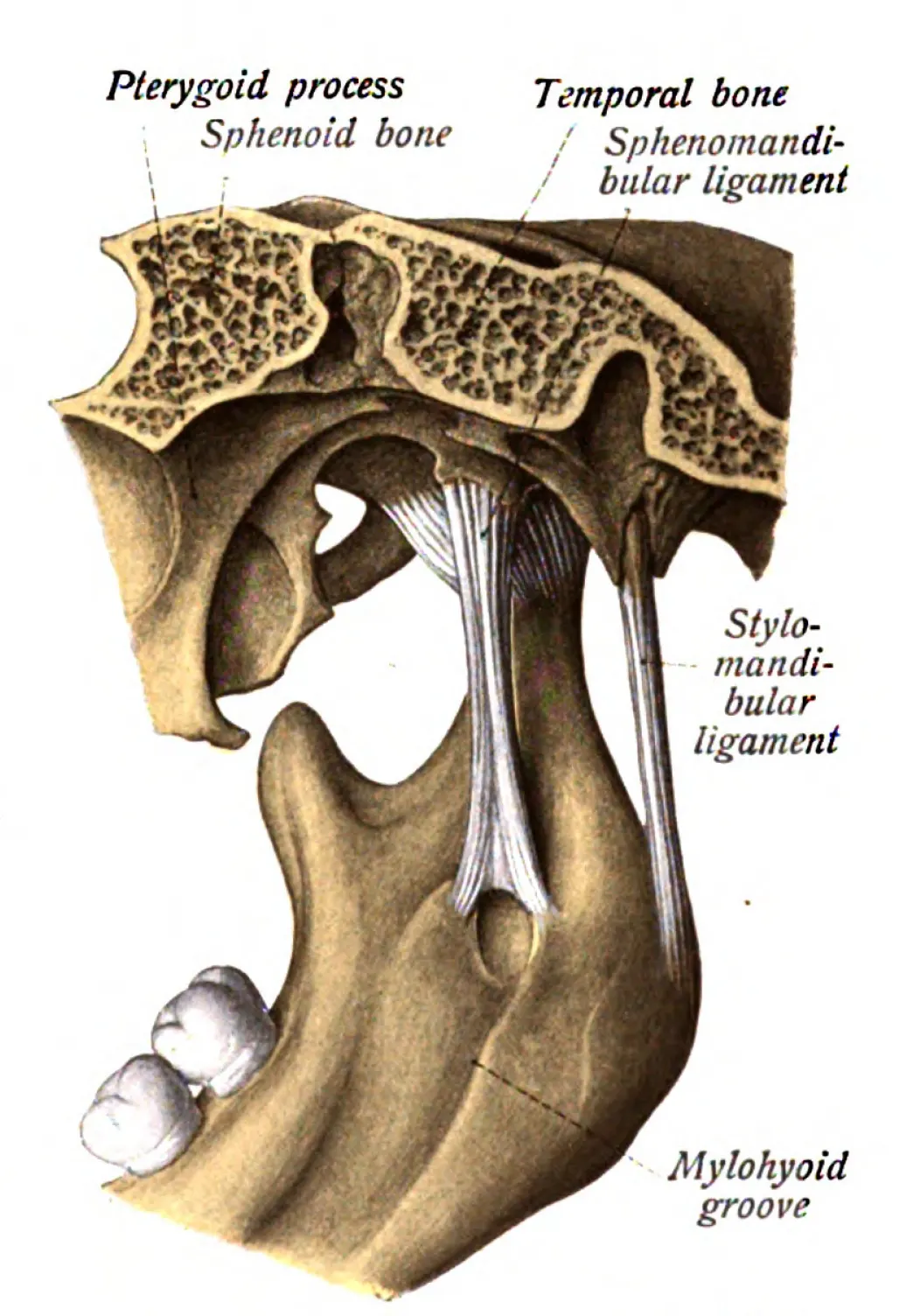

Source: National Institute of Dental and Craniofacial Research: TMD (jaw joint and muscle disorders)
What can a jawline score tell you?
In Lookist, the jawline score is part of an appearance report from one photo. Light, camera height and head angle change how the jawline looks in that photo. The score does not examine your bite, your jaw joint or the bone underneath.
Jawline is also where most people feel unsure. In Lookist data from 312 first scans, 70% of people listed their jawline as something they want to fix, and it had the lowest average of all 15 features, 5.0 out of 10. A jawline score near 5 is normal. Do not read a low score as a reason to load your jaw or keep doing a movement that hurts.
Source: Lookist: Average face score, data from 312 real face scans
What changes the look of a jawline instead?
Lower body fat shows the jaw edge, because the face gets leaner when the whole body does. Head posture and a level camera change the under-chin line in photos. A beard line or a haircut can add shape. For a real bite or jaw problem, orthodontics and jaw surgery are the treatments with evidence, chosen with a specialist.
Lookist builds a daily glow-up plan from your results and the goals you pick, with skin care, gentle hair care and sleep reminders. It does not promise structural changes or a score increase. Scan history lets you see whether fat loss or a new haircut changes how your jaw looks in photos taken the same way.

Frequently asked questions
Does mewing actually work?
Not for adult bone. The American Association of Orthodontists says no current research suggests mewing gives any benefit to the jawline or oral health. We found no controlled trial that tested it. Changes in before and after photos usually come from posture, light, fat loss or growth.
Is there any scientific evidence for mewing?
No trial evidence. A PubMed search on November 7, 2026 found commentaries and studies of social media posts, but no controlled trial of mewing. Orthodontic groups in the US and the UK say the reshaping claims are not supported, and they warn that hard tongue pressure can move teeth.
Do jawline exercisers work?
They can make the chewing muscles stronger, but that is not the same as a sharper jaw. In a 2024 trial, 6 months of daily gum chewing raised bite force with no change in jaw muscle thickness or jaw shape. Hard chewing can also aggravate jaw joint pain.
How long does mewing take to show results?
There is no evidence-based time, because no study has shown that mewing changes the face. Claims of results in weeks or months come from photos with different posture and light. If your jaw, teeth or temples ache, stop and see a dentist.
Can mewing work for teenagers?
There is no trial evidence that it reshapes a growing jaw either. Cleveland Clinic warns that mewing can move teeth, especially in kids and teenagers, and make alignment worse. A teen with a real bite or jaw concern should see an orthodontist, where early treatment has evidence.
Sources and product details
- American Association of Orthodontists: what is mewing, and does it work? (checked November 7, 2026)
- Cleveland Clinic, January 2025: does mewing work to reshape your jaw? (checked November 7, 2026)
- British Orthodontic Society: claims about orthodontics (January 2024) (checked November 7, 2026)
- National Institute of Dental and Craniofacial Research: TMD (jaw joint and muscle disorders) (checked November 7, 2026)
- Jung and colleagues, 2024: Effects of gum chewing training on occlusal force, masseter muscle thickness and mandibular shape, a randomised controlled trial (Journal of Oral Rehabilitation) (checked November 7, 2026)
- Kiliaridis and colleagues, 1995: Effects of fatigue and chewing training on maximal bite force and endurance (American Journal of Orthodontics and Dentofacial Orthopedics) (checked November 7, 2026)
- Alam and colleagues, 2018: Association of facial exercise with the appearance of aging (JAMA Dermatology) (checked November 7, 2026)
- Grillo and colleagues, 2026: Dangerous trends on social media related to facial esthetics, looksmaxxing, softmaxxing and hardmaxxing (Journal of Stomatology, Oral and Maxillofacial Surgery) (checked November 7, 2026)
- Lee, Graves and Friedlander, 2019: Mewing, social media's alternative to orthognathic surgery? (Journal of Oral and Maxillofacial Surgery) (checked November 7, 2026)
- Mekhail, Howard and Milanaik, 2026: From mewing to peptides, looksmaxxing as an emerging pediatric concern (Pediatrics) (checked November 7, 2026)
- Lookist: Average face score, data from 312 real face scans (checked November 7, 2026)
- Lookist on the App Store (checked November 7, 2026)
For photo handling and account controls, read our privacy policy. For an issue with Lookist, visit support.
Put your report to use
Lookist scores your jawline in one front photo and lets you compare scans taken in the same setup over time.
Download Lookist for iPhone