Haircuts for men: the main men's hairstyles by name, and what to ask your barber
The main haircuts for men fall into 4 groups. Short cuts: the buzz cut, crew cut, high and tight and Caesar. Fades and tapers, which blend the sides from short to shorter. Cuts with length on top: the crop, quiff, pompadour, slick back, side part and undercut. Longer and textured styles: curtains, the mullet, the wolf cut and curly tops. Name the cut and the side length when you ask.
Lookist Hairstyle Tester puts 6 styles that suit your face on your own photo, each with a note for the barber.
Download Lookist for iPhoneWhat do fade, taper and guard numbers mean?
Most men's haircuts are described with the same few words. Learn them once and every cut on this page is easy to ask for.
A taper is hair that gets gradually shorter down the back and sides. Wikipedia's entry on the regular haircut lists fade as another name for this kind of taper. In barber shops today, a fade usually means the shortest part goes down to skin or close to it, and a taper means it stays a little longer and shows less skin.
Clipper guards set the length on the sides. The number is the guard size. Bring the number, not a word like 'short'.
| Guard | Hair left | Looks like |
|---|---|---|
| 0 (no guard) | Under 1/16 inch, about 1 mm | Skin shows through |
| 1 | 1/8 inch, about 3 mm | Very short, scalp visible |
| 2 | 1/4 inch, about 6 mm | Short, an even dark shade |
| 3 | 3/8 inch, about 10 mm | Short, covers the scalp |
| 4 | 1/2 inch, about 13 mm | Short but soft |
| 6 | 3/4 inch, about 19 mm | Longest common clipper length |
Fade haircuts for men: low, mid, high, skin and burst
A fade is named for where it starts. The higher it starts, the more skin shows and the sharper it looks. Fades grow out fast. The growth chart in Wikipedia's clipper guide puts a number 2 length at about 2 weeks of growth, so a skin fade looks like a short buzz within 2 weeks.
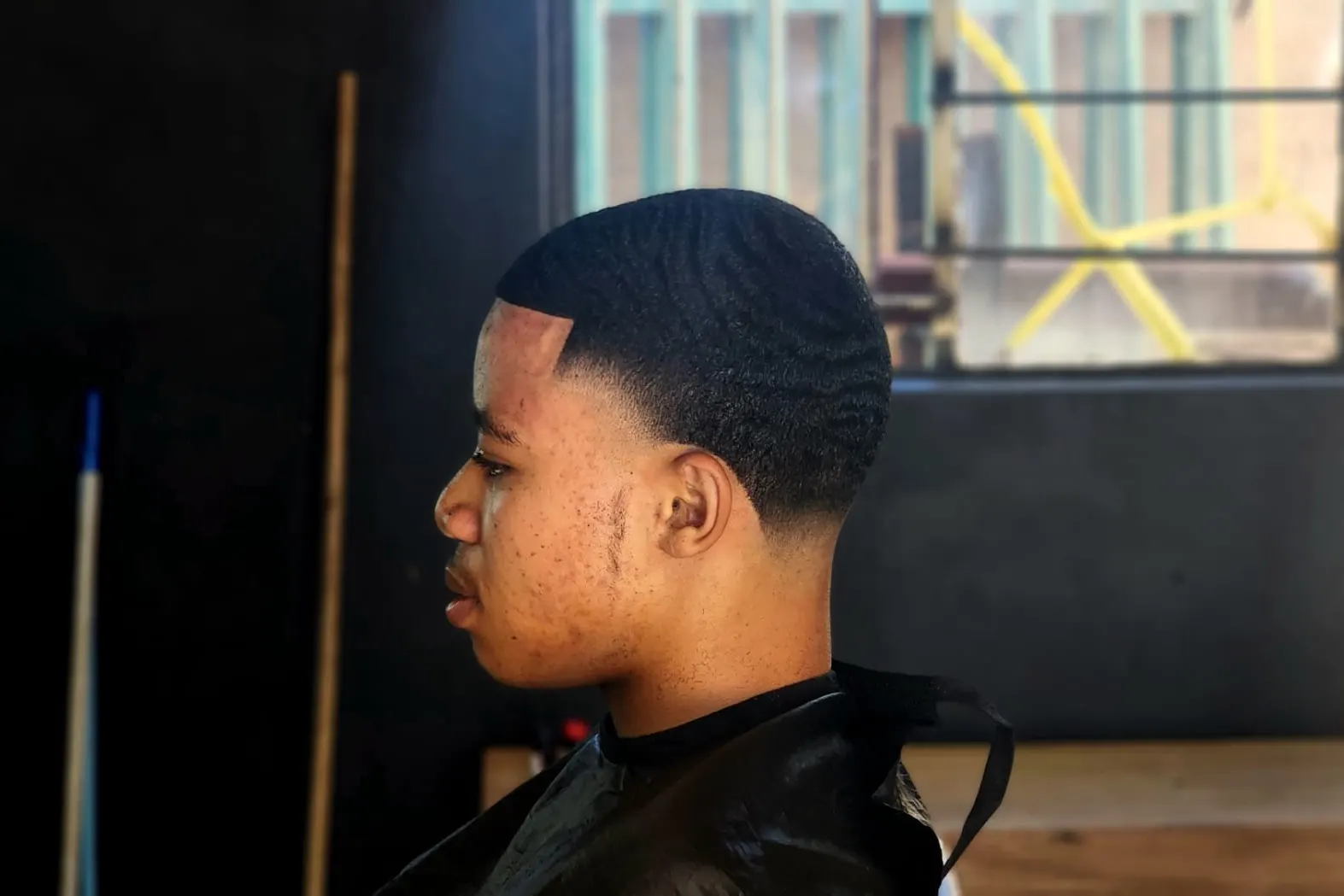

- Low fade: starts just above the ear and at the neckline. The most subtle fade. Ask for 'a low fade, down to a 0 at the neckline, blended into a 2 or 3'.
- Mid fade: starts around the middle of the side of the head, about the line of the temple. Ask for 'a mid fade starting at the temple'.
- High fade: starts near the top of the sides, at the corner of the head. Strong contrast with the top.
- Skin fade or bald fade: any fade that goes down to bare skin. Say 'skin fade' or the barber may stop at a 0.5 or 1.
- Burst fade: a fade that curves in a half circle around the ear and leaves length at the back of the neck. Often worn with a mullet or a curly top.
- Low taper: only the hair near the ear and at the neckline goes short. The rest of the sides keep length. The easiest fade to grow out.
Short haircuts for men
Short cuts need the least styling. They show the shape of your head, so ask the barber to check for a flat back or a bump before you pick a very short guard.
| Cut | What it is | What to ask for |
|---|---|---|
| Buzz cut | One clipper length all over the head | 'A number 2 all over', or the guard you want |
| Crew cut | Short top that gets gradually shorter from the front to the back of the crown, with short tapered sides | 'A crew cut, a bit longer at the front, tapered sides' |
| High and tight | A military crew cut. Back and sides close to skin, a short top | 'A high and tight, skin on the sides, a 2 or 3 on top' |
| Ivy League | A crew cut with the top just long enough for a side part | 'An Ivy League, enough on top to part' |
| Butch cut | Top and upper sides the same short length, about 1/4 to 3/4 inch, following the head | 'A butch, a 3 on top and upper sides, tapered below' |
| Caesar cut | Short, layered hair with a short, straight fringe | 'A Caesar, about 1 inch all over, a straight short fringe' |
| Flattop | Short sides, with the top cut to stand up in a flat, level plane | 'A flattop', and ask how much height on top |
Source: Wikipedia: crew cut
Haircuts for men with length on top
These cuts keep short or faded sides and leave 2 to 6 inches on top for styling. They take a few minutes each morning and some product. Tell the barber how long you want to spend on it.
- Textured crop: a short top cut with texture and pushed forward, often with a short fringe and a fade. Low effort, and the fringe covers part of the forehead.
- French crop: a short top with a short, straight fringe at the front. Close to a Caesar, often with a higher fade.
- Quiff: the front hair styled up and back. The style grew out of the 1950s pompadour and was a staple of Britain's Teddy Boys.
- Slick back: hair combed straight back with a pomade or gel. Needs at least 3 inches on top.
- Side part: the classic regular haircut, with a clear part on one side and tapered back and sides. Also called the taper cut or businessman cut.
- Undercut: long hair on top with the back and sides buzzed very short or shaved, with no blend between them. It was in fashion from the 1910s to the 1940s and again in the 2010s.
- Two-block: a full, layered top over neatly cropped or undercut sides, with a clear step between them.
Source: Wikipedia: undercut (hairstyle)
Pompadour haircut for men: what it is and how to ask
A pompadour is a large volume of hair swept up from the face and worn high over the forehead. It is named after Madame de Pompadour, a mistress of King Louis XV of France. The men's version appeared in the 1950s and early 1960s, worn by Elvis Presley, Johnny Cash and James Dean, and came back in the mid 2000s.
A quiff lifts the front. A pompadour lifts the whole top and sweeps it back. The classic version has longer sides combed back. The modern version has a fade or undercut on the sides.


- Grow enough length on top to sweep back, with the longest hair at the front.
- Ask for 'a pompadour, longest at the front, with a low or mid fade' (modern) or 'scissor cut sides, long enough to comb back' (classic).
- Blow dry the front up and back with a round brush or your fingers.
- Work in a pomade, then comb the top back and shape the front with your hand.
- Book a trim when the sides lose their shape, often every few weeks with a fade.
Source: Wikipedia: pompadour (hairstyle)
Curly hair styles for men
Curly hair adds its own volume, so the usual plan is shorter sides and length on top. Tell the barber how your curls look when dry, because wet curls hang longer than they sit.


- Curly top with a taper or burst fade: the most common pick. Keep 2 to 4 inches on top.
- Curly crop: a shorter curly top with a fringe, cut to keep the curls defined.
- Waves: for tightly curled hair. A short crop on top, brushed often and worn with a durag or wave cap so the curls lie in a ripple pattern.
- Hi-top fade: very short sides with the hair on top grown long and shaped tall.
- Afro: natural growth combed out from the scalp into a rounded shape.
- Longer curls: curls to the jaw or below, with a light trim to remove weight.
How to care for curly hair
The American Academy of Dermatology says dry, textured, curly or thick hair only needs shampoo when needed, at least once every 2 to 3 weeks. Put conditioner on the full length, not only the ends. Comb thick, curly hair in the shower while the conditioner is still in, with a wide-tooth comb.
Source: American Academy of Dermatology: tips for healthy hair
Longer hairstyles for men
Longer cuts take months to grow, so plan the shape early and get small trims on the way.
- Curtains: a long fringe parted in the middle or on one side, with shorter sides and back. It was worn widely in the 1990s.
- Mullet: shorter at the front, top and sides, and longer at the back. Today it is often worn with a burst fade.
- Wolf cut: a shaggy, layered cut that is shorter at the front, like a mullet, often with a fringe. It became popular in the 2020s.
- Flow or long layers: hair to the ears or the collar, pushed back, with layers so it does not look heavy.
- Bun or tied-back hair: long hair pulled back and tied. The American Academy of Dermatology warns that buns and ponytails pulled tight can cause traction alopecia, hair loss from constant pulling. Tie it loosely and change the spot.
Source: American Academy of Dermatology: hairstyles that pull can cause hair loss
What hairstyle is this? How to name a cut from a photo
Most men's cuts can be named with 4 questions. Answer them about the photo and you have the words to ask for it.
- How short are the sides? Skin, very short, short, or long enough to comb.
- Do the sides blend into the top? A smooth blend is a fade or taper. A sharp jump from short to long is an undercut.
- How long is the top? Under 1 inch is a buzz, crew or Caesar. 2 to 4 inches is a crop, quiff or side part. Longer is a pompadour, slick back, curtains or flow.
- Which way does the top go? Forward is a crop or Caesar. Up is a quiff or flattop. Back is a pompadour or slick back. Split in the middle is curtains.
How do I pick a haircut that suits me?
Two things decide it more than trends: your face shape and your hair type. Our guide to men's haircuts by face shape covers which cuts suit an oval, round, square or long face, and step by step how to talk to your barber. If you do not know your face shape, start with face shapes.
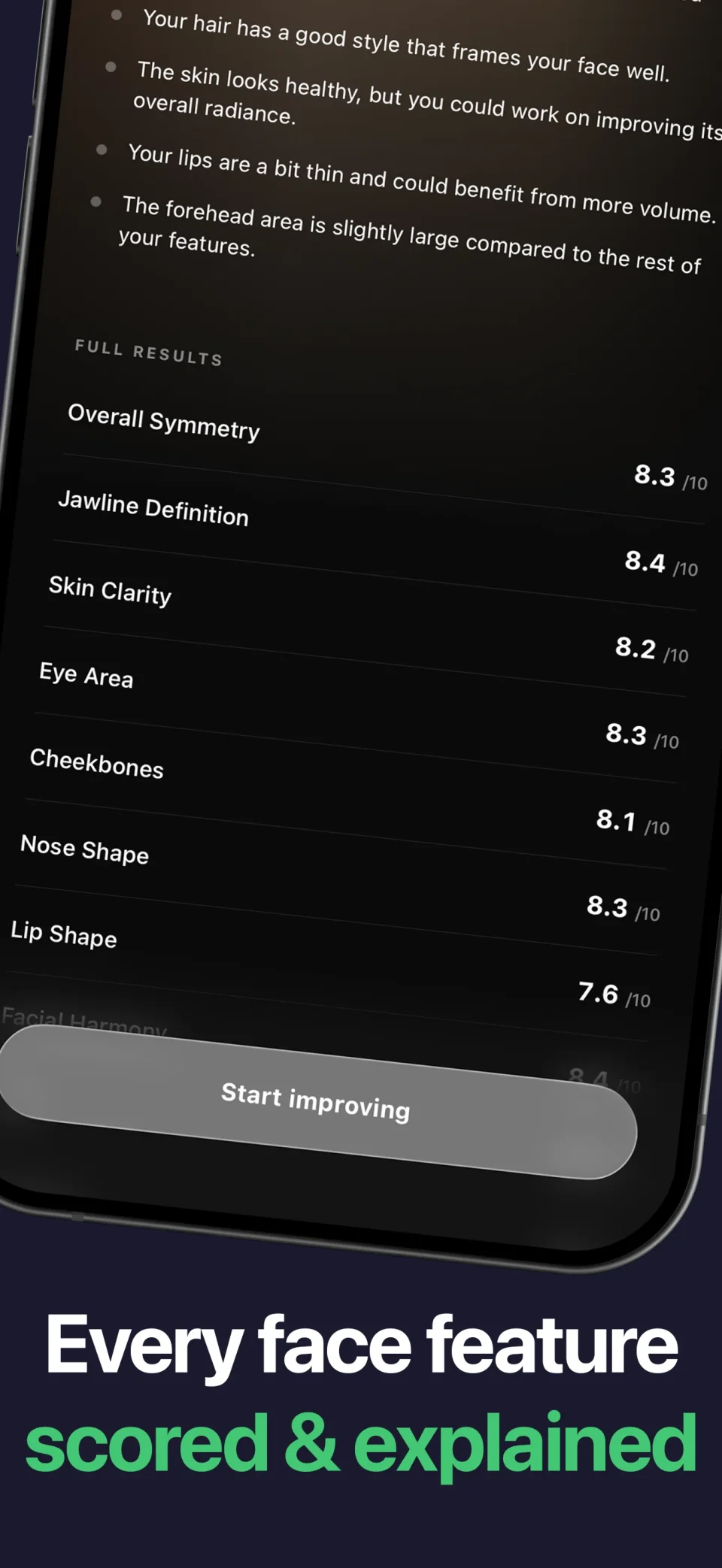
Before you cut, see it on your own face. Lookist's Hairstyle Tester reads your photo, picks 6 styles that suit your face and hair, and shows each one on you with a note on what to ask for. It is an edited picture, not a promise of how your hair will sit, so check with your barber that your hair can hold the style.
Frequently asked questions
What is the most popular haircut for men?
No one publishes a reliable count. Short sides with length on top are the most common shape you will see: a low taper, a mid fade with a textured crop, or a curly top with a burst fade. The classic side part and the buzz cut are the low-effort choices.
What is the difference between a fade and a taper?
Both make the sides gradually shorter. In barber shops today, a fade usually goes down to skin or close to it and starts higher, so it shows more contrast. A taper stays a little longer and only goes short near the ear and the neckline, so it grows out more gently.
What do I ask for to get a pompadour?
Grow enough length on top to sweep back, longest at the front. Ask for a pompadour with a low or mid fade for the modern look, or scissor cut sides long enough to comb back for the classic look. Style it up and back with a blow dryer and pomade.
What haircut should I get with curly hair?
Most curly cuts keep the sides shorter and the length on top, such as a curly top with a taper or burst fade, a curly crop, or a hi-top fade. Tell the barber how your curls look when dry, so they leave enough length. Condition the full length of the hair.
What is a number 2 haircut?
A number 2 is the clipper guard that leaves about 1/4 inch, or 6 mm, of hair. A number 1 leaves about 1/8 inch, a number 3 about 3/8 inch and a number 4 about 1/2 inch. A 'number 2 all over' is a buzz cut at that length.
How often should men get a haircut?
It depends on the cut. Scalp hair grows about 1 cm a month on average, so a skin fade or a very short cut loses its shape within a few weeks. Cuts with length on top hide growth for longer. Longer styles only need a trim to keep their shape and remove split ends.
Sources and product details
- Wikipedia: hair clipper (blade and guard sizes) (checked November 7, 2026)
- Wikipedia: regular haircut (taper and fade) (checked November 7, 2026)
- Wikipedia: crew cut (checked November 7, 2026)
- Wikipedia: high and tight (checked November 7, 2026)
- Wikipedia: Caesar cut (checked November 7, 2026)
- Wikipedia: flattop (checked November 7, 2026)
- Wikipedia: hair (growth rate of scalp hair) (checked November 7, 2026)
- Wikipedia: list of hairstyles (butch, Ivy League, two-block, wolf cut) (checked November 7, 2026)
- Wikipedia: quiff (checked November 7, 2026)
- Wikipedia: undercut (hairstyle) (checked November 7, 2026)
- Wikipedia: pompadour (hairstyle) (checked November 7, 2026)
- Wikipedia: waves (hairstyle) (checked November 7, 2026)
- Wikipedia: hi-top fade (checked November 7, 2026)
- Wikipedia: afro (checked November 7, 2026)
- Wikipedia: curtained hair (checked November 7, 2026)
- Wikipedia: mullet (haircut) (checked November 7, 2026)
- American Academy of Dermatology: tips for healthy hair (checked November 7, 2026)
- American Academy of Dermatology: hairstyles that pull can cause hair loss (checked November 7, 2026)
- Lookist on the App Store (checked November 7, 2026)
For photo handling and account controls, read our privacy policy. For an issue with Lookist, visit support.
Put your report to use
Lookist Hairstyle Tester puts 6 styles that suit your face on your own photo, each with a note for the barber.
Download Lookist for iPhone