Does looksmaxxing work? What has evidence and what does not
Partly. The basic habits work: daily sunscreen, acne treatment, enough sleep, lower body fat, grooming, a haircut that fits and a better photo setup all have evidence or clear visible effects. The viral hacks do not. Mewing has no good evidence of reshaping an adult jaw, chewing training did not change jaw shape in a trial, and bonesmashing only causes injury.
Lookist turns one photo into feature scores and a daily plan built on the habits that work.
Download Lookist for iPhoneDoes looksmaxxing actually work?
It depends on which looksmaxxing you mean. The word covers two very different things. Softmaxxing means skin care, grooming, fitness, sleep and clothes. Hardmaxxing means surgery, drugs and DIY tricks like bonesmashing. Wikipedia describes the practice as based heavily on anecdotes that mainstream medicine does not support. It also notes that softmaxxing habits like skin care and hairstyles were standard advice in men's magazines long before the word existed.
So the honest answer has two halves. The soft habits change how you look, and most of them have research behind them. The viral bone and jaw hacks do not work in adults, and some of them hurt people. The table below sorts the common methods.
| Method | What the evidence says | Verdict |
|---|---|---|
| Daily sunscreen | A 4.5-year trial found 24% less skin aging with daily use | Works |
| Acne treatment | Takes several weeks to a few months to show, per dermatologists | Works, slowly |
| Enough sleep | One night of sleep loss made eyes, skin and mouth look more tired in a study | Works |
| Lower body fat | Face fat is linked to how attractive and healthy a face looks | Works |
| Grooming and haircut | Changes how the face is framed, with low risk | Works |
| Photo setup | A selfie from 12 inches makes the nose look about 30% wider | Works for photos |
| Mewing (adults) | Orthodontists say there is no research showing a jaw benefit | No evidence |
| Chewing gum or jaw training | A 6-month trial found no change in jaw shape or muscle thickness | No effect on bone |
| Bonesmashing | Surgeons warn of fractures, nerve injury and vision changes | Harmful |
| Grey-market drugs and peptides | Unregulated, untested and linked to health risks | Risky |
Source: Wikipedia: Looksmaxxing (softmaxxing, hardmaxxing and criticism)
How does looksmaxxing work?
The useful part of looksmaxxing works on the parts of your appearance that change: skin, body fat, hair, grooming, how rested you look and how you show up in photos. These change over weeks and months with steady habits.
Bone does not change that way. Adult bone structure, like the shape of the jaw, the chin and the cheekbones, does not change with habits or exercises. Surgery is the only way to change it on purpose.
How to get a jawline: what you can change and what you can't
Does skin care work for looksmaxxing?
Yes, and it is the most proven part. In a randomized trial in Australia, adults who used broad-spectrum sunscreen every day showed no detectable increase in skin aging after 4.5 years. Their skin aged 24% less than the group that used sunscreen when they felt like it.
Acne treatment works too, but slowly. The American Academy of Dermatology says a treatment may take several weeks to a few months to show a difference, and that switching products too often can irritate skin and cause breakouts. Pick one approach and give it time.
Do sleep and body fat change your face?
Sleep shows fast. In a 2013 study at the Karolinska Institutet in Sweden, people were photographed after normal sleep and again after a night of only 5 hours followed by 31 hours awake. Raters saw more hanging eyelids, redder and more swollen eyes, darker circles, paler skin, more fine lines and more droopy mouth corners after sleep loss. The sleep-deprived faces also looked sadder.
Body fat shows in the face too. A 2018 review in Frontiers in Psychology described growing evidence of a strong link between facial fat and how attractive and healthy a face looks. Its meta-analysis also found that how full a face looks tracks body mass and body fat, so face fat goes down when total body fat goes down. The NHS advises adults to get at least 150 minutes of moderate activity a week, plus strength work on at least 2 days.
Do grooming and photo setup count?
Yes. A haircut that suits your face shape, tidy brows and a clean beard line change how your face is framed. They are cheap, fast and reversible, which makes them the best place to start.
Photos matter more than most people think, because much of looksmaxxing is judged on photos. A 2018 study found that a selfie taken from 12 inches makes the nose look about 30% wider than a photo with no lens distortion. At 5 feet, the difference was almost zero. Soft window light, a camera at eye height and some distance can change a photo more than months of face exercises.
Source: Ward and colleagues, 2018: Nasal Distortion in Short-Distance Photographs
Does mewing work for adults?
There is no good evidence that it does. Mewing means pressing the whole tongue to the roof of the mouth, with the idea that it reshapes the jaw over time. The American Association of Orthodontists says the scientific evidence for mewing's jawline claims is 'as thin as dental floss' and that no current research shows a benefit to the jawline or oral health.
Good tongue posture is not harmful. Expecting it to rebuild an adult jaw is where the claim breaks down. Facial structure comes from genetics, bone growth and muscle development together, and changing where the tongue rests does not undo that.
Source: American Association of Orthodontists: What is mewing, and does it work?
Do jaw exercises or chewing gum reshape your jaw?
Not the bone. In a randomized controlled trial at Yonsei University in South Korea, 58 healthy adults were split into two groups. One group chewed gum three times a day for 6 months. Their maximum bite force went up, but there was no significant change in masseter muscle thickness or in the shape of the jaw.
In that trial, bite force changed and the jaw outline did not. Jaw trainers and mastic gum are sold on the opposite idea.
Does bonesmashing work?
No. Bonesmashing means hitting your face with a hammer or another hard object, in the belief that bone will heal back bigger. There is no evidence for it. Facial surgeons warn of fractures, misalignment, nerve and blood vessel injury, deformity and changes in vision. Wikipedia notes many sources treat it as an inside joke and as misinformation.
The joke still spreads. A 2026 study in the Journal of Stomatology, Oral and Maxillofacial Surgery found a 5,000% rise in Google searches for 'bonesmashing' compared with the previous year. About 98% of the people in bonesmashing content were male. The authors warn that tutorial-style posts and pseudoscientific language make dangerous practices look normal.
Why do people say looksmaxxing is bad?
Not because of skin care. The criticism is about the culture around it. A 2025 study read 8,072 comments on a large looksmaxxing forum. Users rated each other harshly, treated normal features as problems to fix with surgery and drugs, and in dozens of cases urged other users toward suicide.
A June 2026 report by the Centre for Young Lives, a UK think tank, found that content can move from skin care and gym routines to bonesmashing, starvation diets, steroid cycles and unregulated peptide injections. Boys said they see it without searching for it. The report also found racism and misogyny in much of the content.
So is looksmaxxing good or bad?
A fair rule: keep the habits that make you healthier and look better at the same time, and drop the rest. Skin care, sleep, exercise, grooming and good photos pass that test. Rating forums, bone hacks, crash diets and drugs bought online fail it.
It also helps to keep the goal personal. Compare yourself with your own photos from a month ago, taken the same way, not with strangers or edited images.
- Good: daily sunscreen, gentle cleanser and moisturizer, one acne treatment given time.
- Good: 150 minutes of activity a week, strength work, food you can keep up.
- Good: regular sleep, a haircut that fits, tidy brows and beard.
- Skip: mewing to reshape an adult jaw, jaw trainers, bonesmashing.
- Skip: starvation diets, steroids, grey-market peptides, strangers rating your face.
Does looksmaxxing work for girls?
The habits that work are the same for everyone. Sunscreen, acne care, sleep, fitness, a haircut that suits the face shape and better photo setup help women as much as men. The sleep study and the sunscreen trial above both included men and women.
The hacks fail for everyone too. Mewing, jaw training and bonesmashing do not reshape adult bone in anyone.
When does looksmaxxing become a problem?
Wanting to look better is normal. It becomes a problem when it takes over. Watch for long mirror checks every day, avoiding photos or people, feeling one feature ruins everything, or skipping meals to change your face.
The NHS describes body dysmorphic disorder, which is most common in teenagers and young adults and can get better with treatment. Talk to a doctor or someone you trust. If you have thoughts of ending your life, in the US call or text 988 to reach the 988 Lifeline, and in the UK call Samaritans on 116 123.
How Lookist fits the part that works
Lookist reads one front photo and gives an overall score out of 10 and 15 feature scores, including skin clarity, skin texture, skin tone, jawline, symmetry and hair. It adds 3 to 7 written notes on what the scan noticed. A score describes that photo in that light, not your worth.
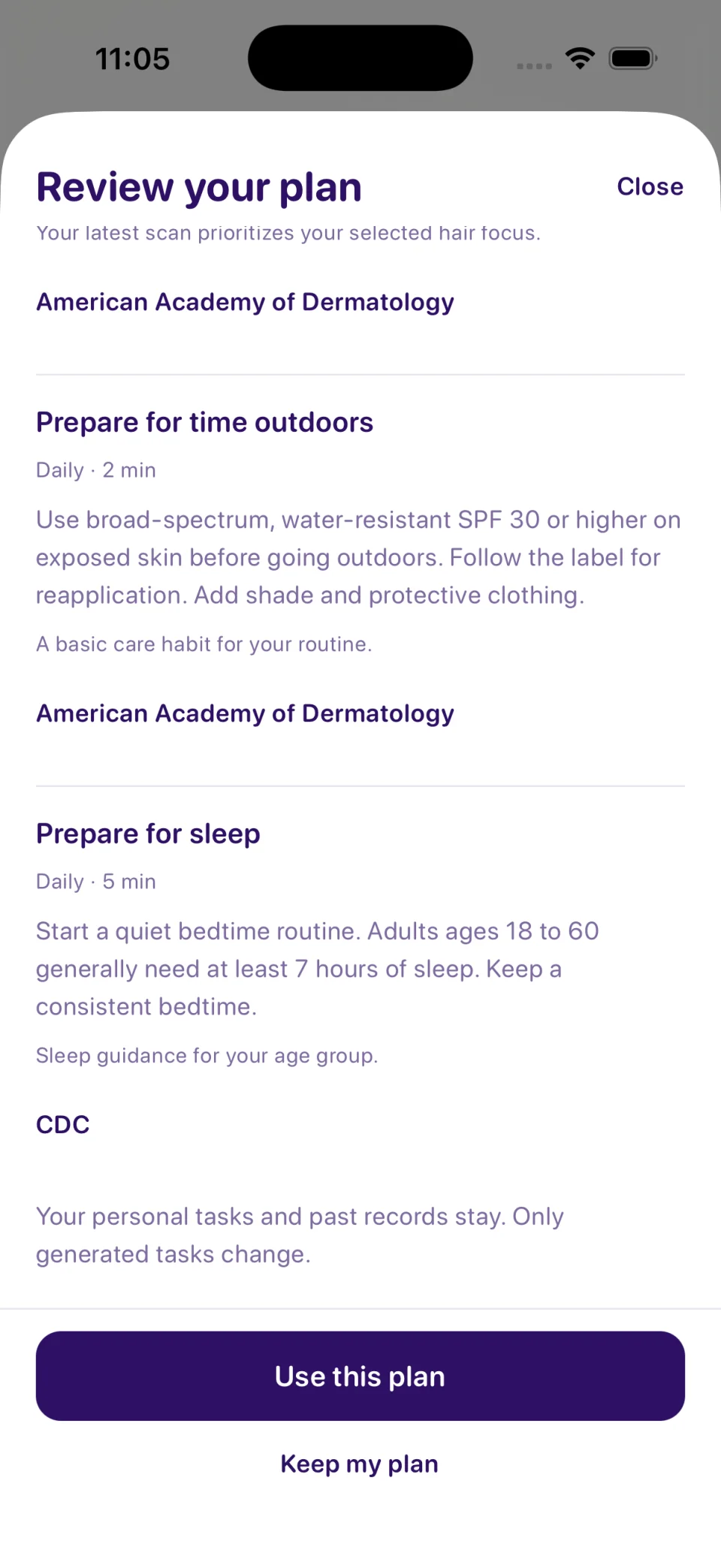
The glow-up plan is built from your results and the goals you pick, with daily tasks for skin care, gentle hair care and sleep. Scan history lets you compare your own photos over time. Lookist does not suggest mewing, surgery or drugs.
Frequently asked questions
Does looksmaxxing actually work?
Partly. Skin care, sunscreen, sleep, lower body fat, grooming, a haircut that fits and better photo setup all change how you look, and most have research behind them. Mewing, jaw exercises and bonesmashing do not reshape adult bone, and bonesmashing causes injury.
Is looksmaxxing good or bad?
The habits are good: skin care, sleep, exercise and grooming improve health and looks. The culture can be bad. Studies of looksmaxxing forums found harsh ratings, pressure toward surgery and drugs, and users urging others toward suicide. Keep the habits and skip the forums and the hacks.
Is looksmaxxing real?
Looksmaxxing is a real trend, but much of its advice is not backed by medicine. The parts that overlap with ordinary health advice, like sunscreen, acne care, sleep and fitness, are real. Claims about reshaping an adult jaw with mewing, gum or hammers have no good evidence.
Why is looksmaxxing bad?
The criticism is mostly about the culture. Researchers found looksmaxxing forums rate users harshly, treat normal faces as problems to fix and push risky procedures. A 2026 UK report found content can escalate to bonesmashing, starvation diets and steroids, and often carries misogyny and racism.
How long does looksmaxxing take to work?
It depends on the habit. One night of poor sleep already shows in the eyes and skin. Acne treatment may take several weeks to a few months, according to the American Academy of Dermatology. Fat loss and fitness show over months. Sunscreen protects skin over years. Bone structure in adults does not change with habits at all.
Is looksmaxxing worth it?
The soft habits are worth it because they also make you healthier: skin care, sleep, exercise and grooming. Bone hacks, forum ratings and grey-market drugs are not worth it, because they do not work or carry real risks. Judge progress against your own past photos taken the same way.
Sources and product details
- Wikipedia: Looksmaxxing (softmaxxing, hardmaxxing and criticism) (checked November 7, 2026)
- Hughes and colleagues, 2013: Sunscreen and prevention of skin aging, a randomized trial (Annals of Internal Medicine, PubMed) (checked November 7, 2026)
- American Academy of Dermatology: Acne skin care tips (checked November 7, 2026)
- Sundelin and colleagues, 2013: Cues of fatigue, effects of sleep deprivation on facial appearance (Sleep) (checked November 7, 2026)
- de Jager and colleagues, 2018: Facial adiposity, attractiveness, and health, a review (Frontiers in Psychology) (checked November 7, 2026)
- NHS: Physical activity guidelines for adults aged 19 to 64 (checked November 7, 2026)
- Ward and colleagues, 2018: Nasal Distortion in Short-Distance Photographs (checked November 7, 2026)
- American Association of Orthodontists: What is mewing, and does it work? (checked November 7, 2026)
- Jung and colleagues, 2024: Effects of gum chewing training on occlusal force, masseter muscle thickness and mandibular shape (Journal of Oral Rehabilitation, PubMed) (checked November 7, 2026)
- Grillo and colleagues, 2026: Dangerous trends on social media related to facial esthetics (Journal of Stomatology, Oral and Maxillofacial Surgery, PubMed) (checked November 7, 2026)
- Halpin and colleagues, 2025: When Help Is Harm: Health, Lookism and Self-Improvement in the Manosphere (Sociology of Health and Illness) (checked November 7, 2026)
- Centre for Young Lives, June 2026: 'Don't blame life, blame your face' report on looksmaxxing (checked November 7, 2026)
- NHS: Body dysmorphic disorder (BDD) (checked November 7, 2026)
- 988 Lifeline (checked November 7, 2026)
- Samaritans: contact us (checked November 7, 2026)
- Lookist on the App Store (checked November 7, 2026)
For photo handling and account controls, read our privacy policy. For an issue with Lookist, visit support.
Put your report to use
Lookist turns one photo into feature scores and a daily plan built on the habits that work.
Download Lookist for iPhone